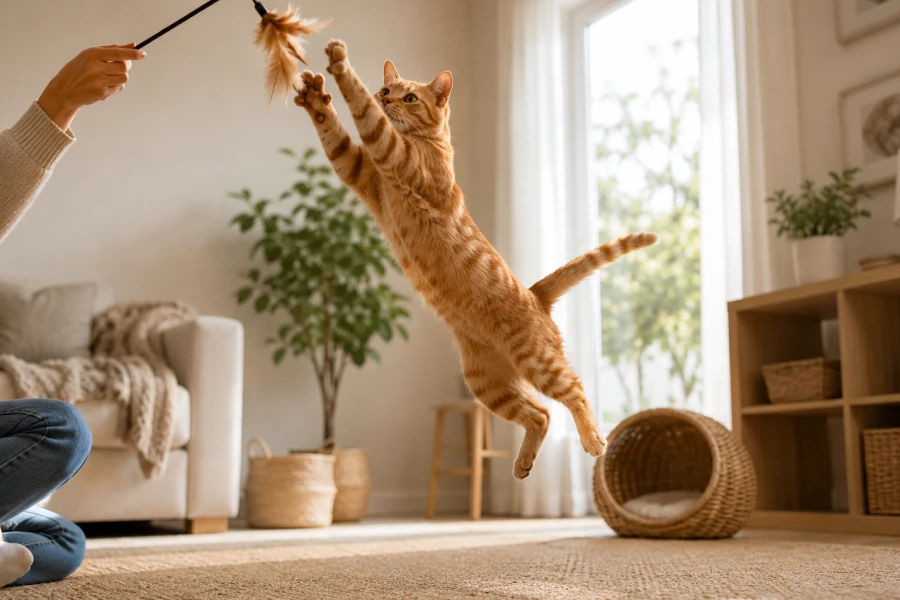
A thoughtful cat exercise plan helps indoor cats use their energy before it becomes stress, mischief, or midnight chaos. Many cat owners notice the problem only after furniture suffers. Others see weight gain, boredom, or sudden zoomies. The solution does not need to feel complicated. Small play sessions can shape a calmer daily rhythm. Your cat needs movement, curiosity, and reward. A smart routine supports all three needs. It also makes your home feel more predictable. When play becomes intentional, your cat feels more satisfied. That consistency turns ordinary minutes into better feline wellness.
Indoor cats live safer lives, but they still carry natural hunting instincts. They need to stalk, chase, leap, pounce, and recover. Without those outlets, energy often turns into restlessness. A playful home gives that energy a healthier direction. Many owners start with indoor cat enrichment because it fits real apartments. Toys do not need to be expensive. Timing matters more than quantity. Short sessions can work beautifully. Your cat learns what to expect. Over time, boredom loses its power.
Cats usually enjoy play that mirrors a hunt. They watch first, then creep closer. The chase comes next. A satisfying catch should follow. After that, many cats groom or nap. This pattern feels instinctive and rewarding. Wand toys work well for this rhythm. Crinkle balls can also help. A cat play schedule keeps sessions from becoming random. Morning and evening are often effective. Your cat stays engaged because play feels purposeful.
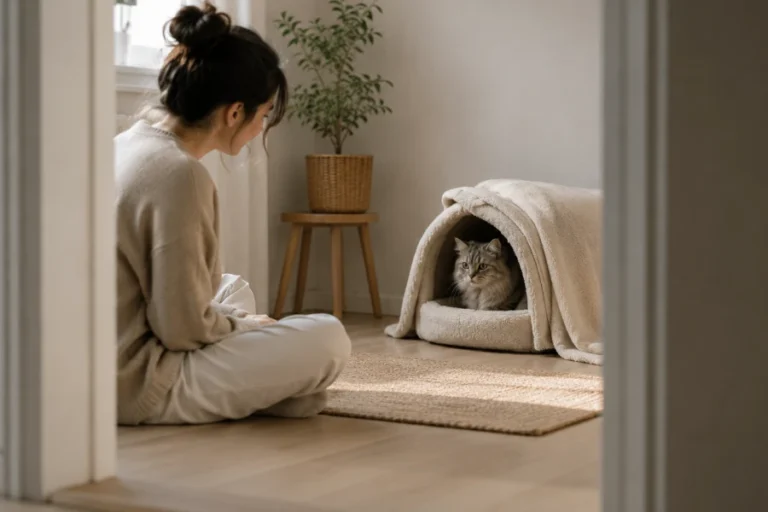
Every cat has different comfort levels. Some cats sprint after feather toys immediately. Others need slower invitations. Watch the ears, tail, pupils, and posture. Relaxed curiosity is a strong sign. Flattened ears or hiding mean pressure is rising. Respecting those cues builds trust. You can shorten sessions when needed. Gentle progress works better than forcing excitement. Senior cats may prefer low jumps. Younger cats often need more variety. The goal is engagement, not exhaustion.
Regular movement supports healthy body condition and emotional balance. It helps cats burn energy in safe ways. It can also reduce attention-seeking behaviors. Many homes benefit from a cat fitness routine that matches feeding times. Play before meals can feel especially natural. Your cat chases, catches, then eats. That sequence satisfies instinct. It may also improve post-meal calm. Small wins make the routine easier. You begin seeing behavior patterns more clearly.
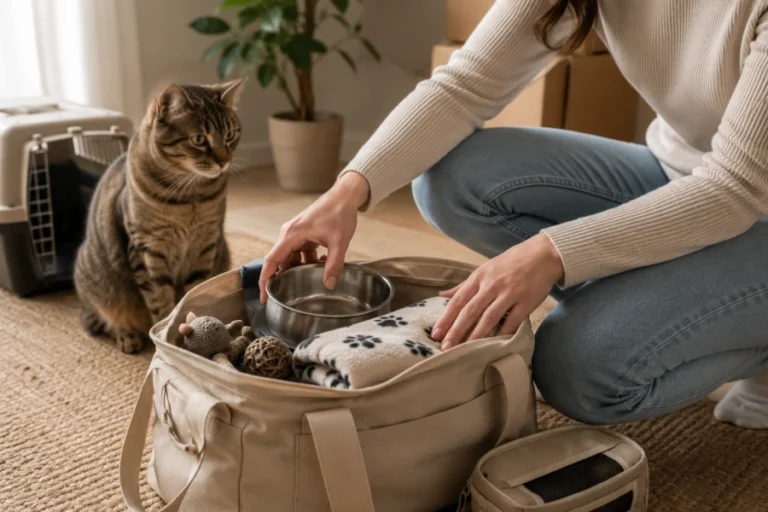
Toy rotation keeps familiar objects exciting. Keep only a few options visible. Store the rest out of sight. Bring them back after several days. This simple trick renews curiosity. Wand toys create movement you control. Puzzle feeders add thinking to eating. Tunnels make stalking more interesting. Cardboard boxes create hiding opportunities. Soft balls encourage solo batting. Avoid leaving string toys unattended. Safety matters as much as fun.
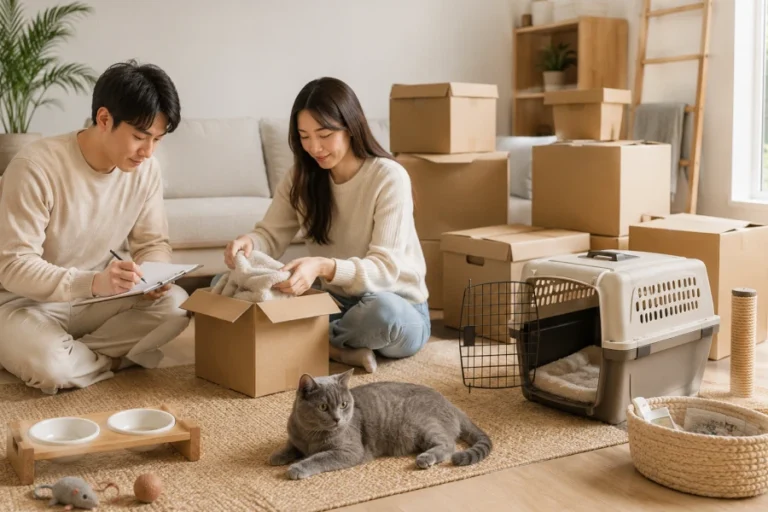
The best routine is one you can maintain. Start with five to ten minutes. Repeat the session daily. Add more only when it feels natural. Track what your cat enjoys most. Notice which toys lose appeal quickly. A simple note can reveal patterns. That makes future play more efficient. Your home becomes more responsive. Your cat gains structure without pressure. Consistency builds confidence for both of you.

Leave a comment