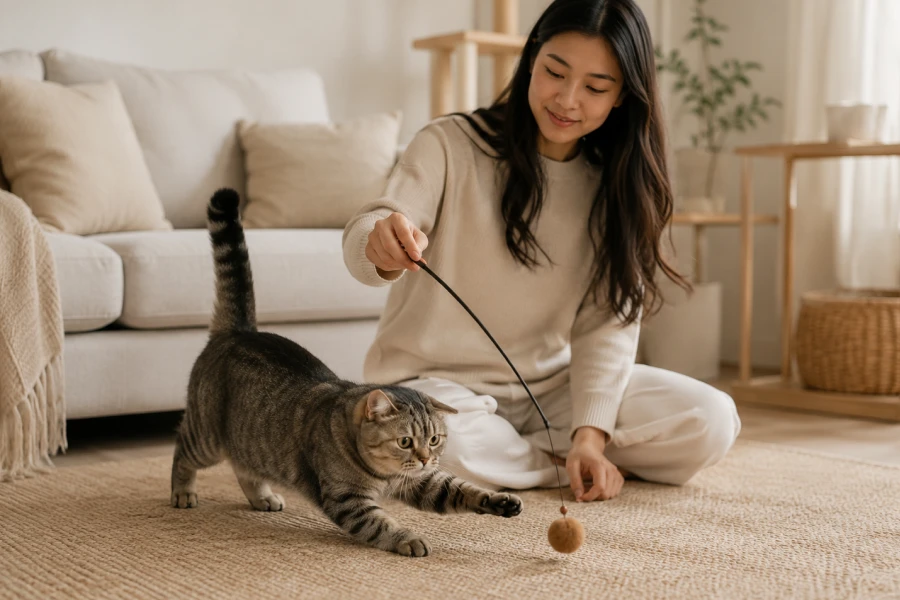
An indoor cat play routine can make a quiet home feel richer, more stimulating, and more emotionally balanced. Cats may seem independent, but they still need daily engagement. Without it, they often create their own entertainment. That may mean scratching, racing, or bothering other pets. Planned play gives those instincts a better outlet. It also helps owners understand feline moods. Each session becomes a small conversation. Your cat shows preferences through movement. You respond with better timing. The result is a home that feels calmer and more connected.
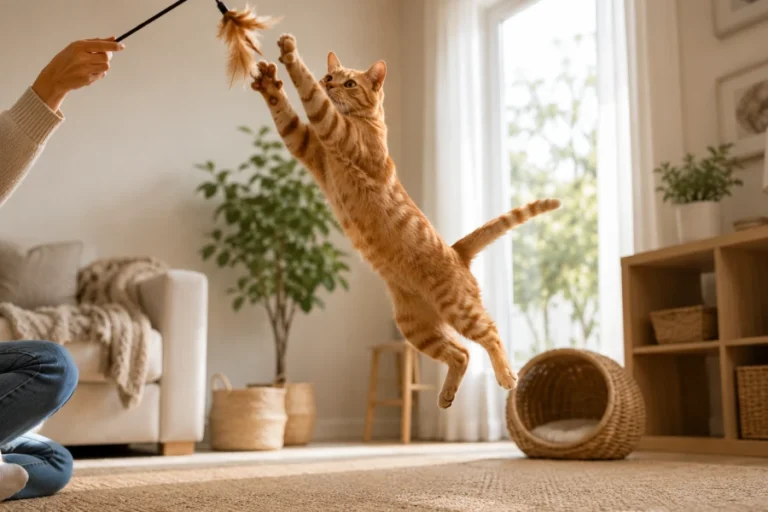
Cats are built for short bursts of effort. They rarely need long workouts. Instead, they thrive on focused moments. A feather darting behind furniture can feel thrilling. A ball rolling under a chair can spark curiosity. This is why interactive cat toys often work so well. They copy prey movement. They invite problem-solving. They make the owner part of the game. That shared rhythm strengthens trust over time.
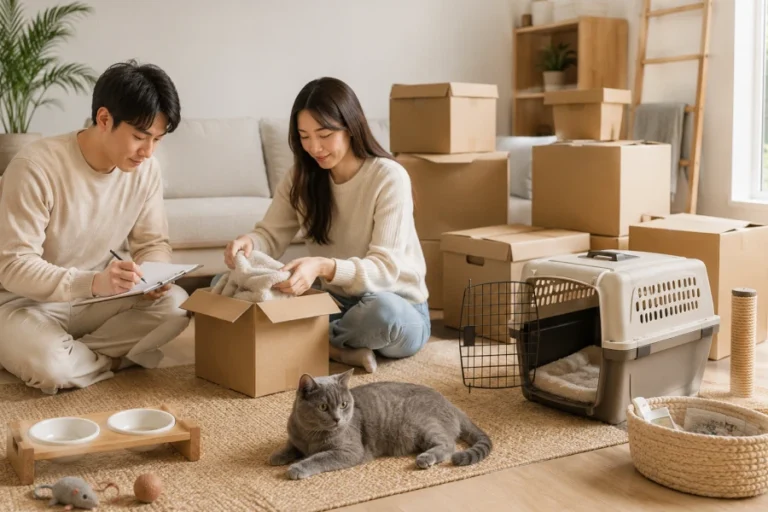
Busy owners need routines that feel realistic. Ten perfect sessions are not required. Two short play windows can change the day. Morning play helps release overnight energy. Evening play can prevent restless behavior later. Pairing play with meals makes the habit easier. Cats learn patterns quickly. A playtime tracker can show which moments work best. You stop guessing. Your cat starts anticipating healthy stimulation.
Variety depends more on presentation than shopping. One toy can become many games. Move it fast one day. Hide it slowly another day. Drag it behind a blanket. Let it disappear around a corner. Cats love suspense. They also enjoy small victories. Change the room occasionally. Use chairs, boxes, and rugs. A familiar space can feel new. Simple changes often create stronger engagement.
Boredom rarely announces itself clearly. It appears as overgrooming, begging, knocking objects down, or sudden aggression. Play helps redirect that tension. Your cat gains choices and challenge. A structured routine supports healthy cat movement without overwhelming the home. Short sessions can satisfy deep instincts. The key is ending before interest disappears. Leave your cat wanting more. That keeps tomorrow’s session appealing. Predictable fun can make behavior feel steadier.
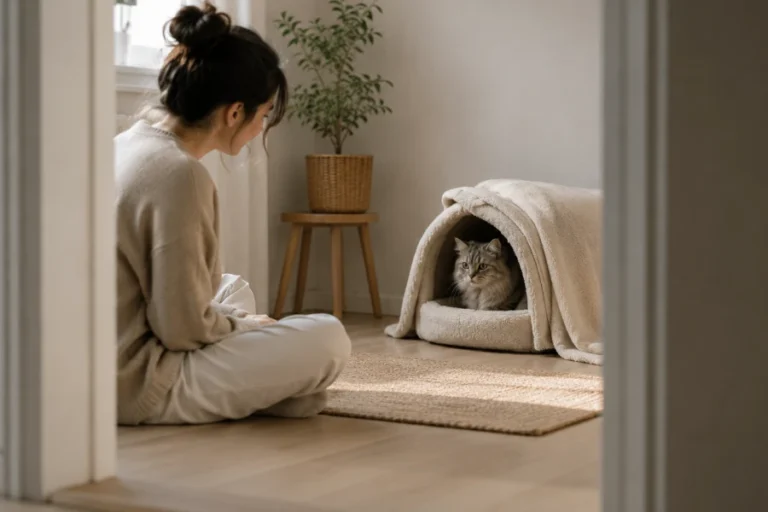
Some cats prefer dramatic chases. Others enjoy slow stalking. A shy cat may need distance first. A bold cat may want faster action. Watch how your cat approaches. Notice when attention fades. Pause before frustration appears. Offer wins during every session. Let the toy be caught sometimes. Ending with success matters. It helps your cat feel capable. That feeling encourages future participation.
The routine works best when everyone understands it. Family members can share play duties. Children can help with supervision. Adults can manage higher-energy sessions. Consistency keeps the cat from feeling confused. Keep toys in one accessible place. Use reminders if needed. Celebrate small improvements. Better sleep may appear first. Cleaner behavior may follow later. With repetition, play becomes part of home life.

Leave a comment