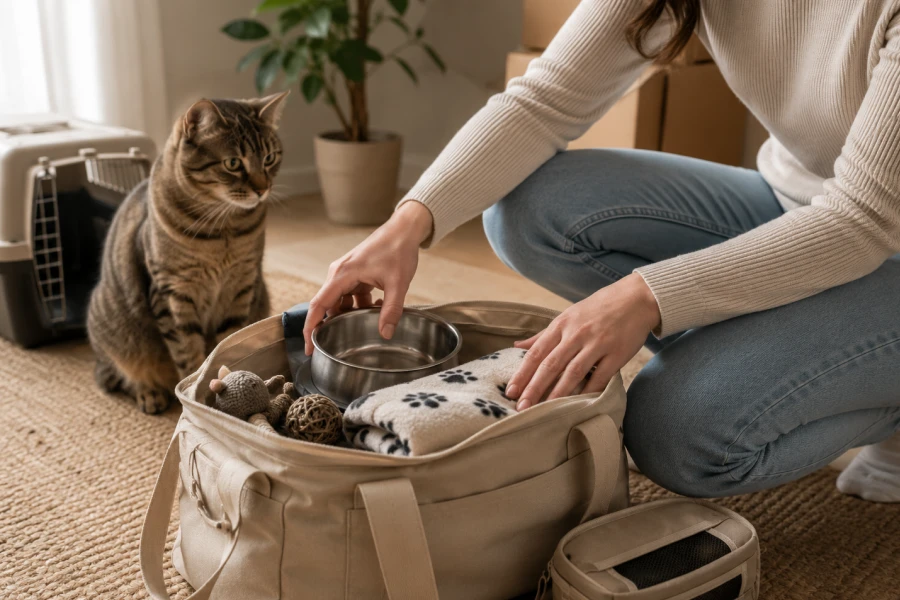
Knowing how to pack for pet during move can prevent confusion when the house is busy, loud, and full of boxes. Pets depend on familiar routines. Moving disrupts nearly all of them. Food may shift location. Beds may disappear. Favorite toys may get packed too soon. A smarter packing approach protects essentials until the right moment. It also gives owners peace of mind. You know what stays accessible. Your pet feels less forgotten in the process.
Pet essentials should never vanish into random boxes. Create one clearly marked bag. Include food, bowls, treats, medication, waste bags, and towels. Add records if needed. Keep leashes and carriers nearby. A pet packing list helps prevent missed items. Check it before the final day. Store the bag where you can reach it quickly. Moving feels easier when essentials stay visible. Your pet benefits from that organization.
Comfort items should be packed last. Your pet may rely on them more than usual. Keep favorite blankets, beds, and toys available. Avoid washing everything before the move. Familiar scent can be calming. A pet moving essentials kit should include those trusted objects. Put them in the new room first. That makes arrival less shocking. Pets settle faster when something smells like home. Comfort is not a small detail.
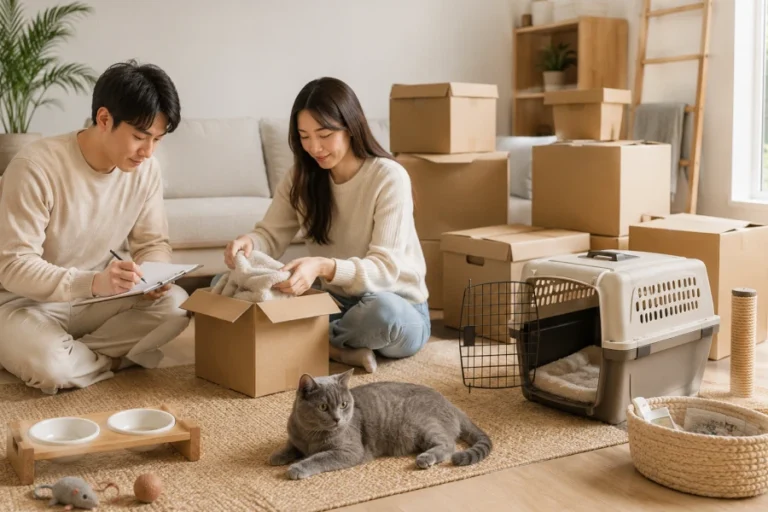
Travel supplies need their own system. They should not sit under heavy boxes. Keep carriers clean and accessible. Check clasps before leaving. Pack water and cleaning supplies. Dogs may need break items. Cats may need absorbent pads. Medication should stay temperature-safe. Keep emergency contacts available. A separate travel section prevents frantic searching. Better access creates a calmer journey. Calm logistics support calmer animals.
Some pets need special preparation. Seniors may require medication schedules. Puppies may need frequent breaks. Cats may need litter access before departure. Anxious animals may need more practice with carriers. A pet travel preparation plan keeps those needs visible. Write instructions if someone else helps. Include feeding amounts. Add behavior notes. Clear details prevent confusion. Your pet receives steadier care during disruption.
Many problems come from packing too efficiently. Owners box up familiar items early. They forget medication refills. They bury leashes in storage bins. They leave no cleaning supplies accessible. These mistakes are easy to avoid. Pack human clutter first. Pack pet comfort last. Keep documents separate. Confirm food supply before departure. Label everything clearly. Moving creates enough pressure already. Good packing removes unnecessary stress.
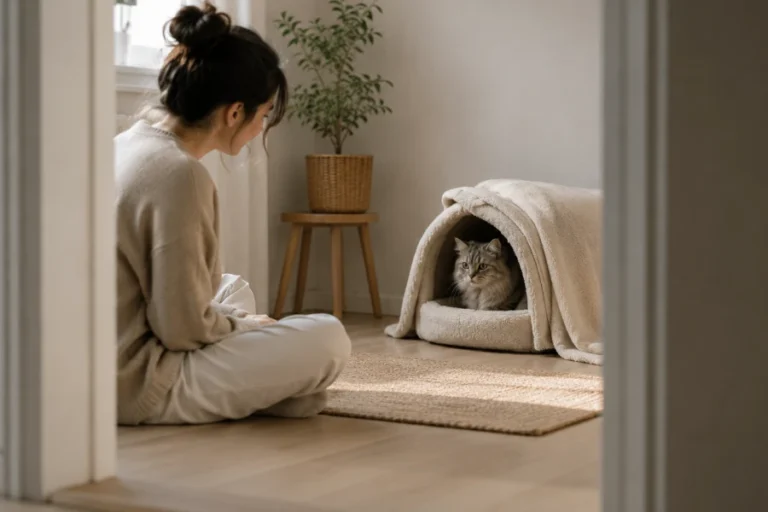
Unpacking should serve your pet first. Set up one calm room immediately. Add bedding, water, food, and litter or pads. Keep noise low when possible. Let exploration happen gradually. Do not invite too much excitement. Watch your pet’s body language. Offer familiar routines quickly. Feed at the usual time. Use the same bowl if possible. Familiar details make the new home feel safer.

Leave a comment